| Item | Our Solution | The Ocean Cleanup |
|---|---|---|
| Cost | $500M (1/6 for platform) | $7.5B |
| Time to Completion | 100 days | 10 years |
| Core Method | Solidification in place | Trawling + transport |
| Plastic Volume | 100,000 tons | 100,000 tons |
| Secondary Pollution | Very Low | High |
| Creates Infill? | Yes | No |
| Recontamination Risk | Very low (tested) | Potentially high |
| Adaptability | High (various plastics) | Low (rigid model) |
Special attention should be paid to this: Over the next 10 years, the ocean will continue to accumulate massive amounts of new plastic waste. Is there a long-term plan from The Ocean Cleanup organization to keep pace with this rising pollution? To date, no clear answers have been provided regarding whether their actual processing capacity offsets the new waste being generated.
Our system costs $500 million in total, one-sixth of which is allocated to a mobile platform. Once the Pacific garbage patch is cleaned, the platform can be relocated to other marine regions, ensuring a long-term and sustainable cleanup effort.
More importantly, this platform can also utilize our proprietary binder technology to convert the processed waste into environmentally friendly, affordable housing materials. These materials can be used to support island nations and impoverished coastal regions in the Pacific, generating added social value.
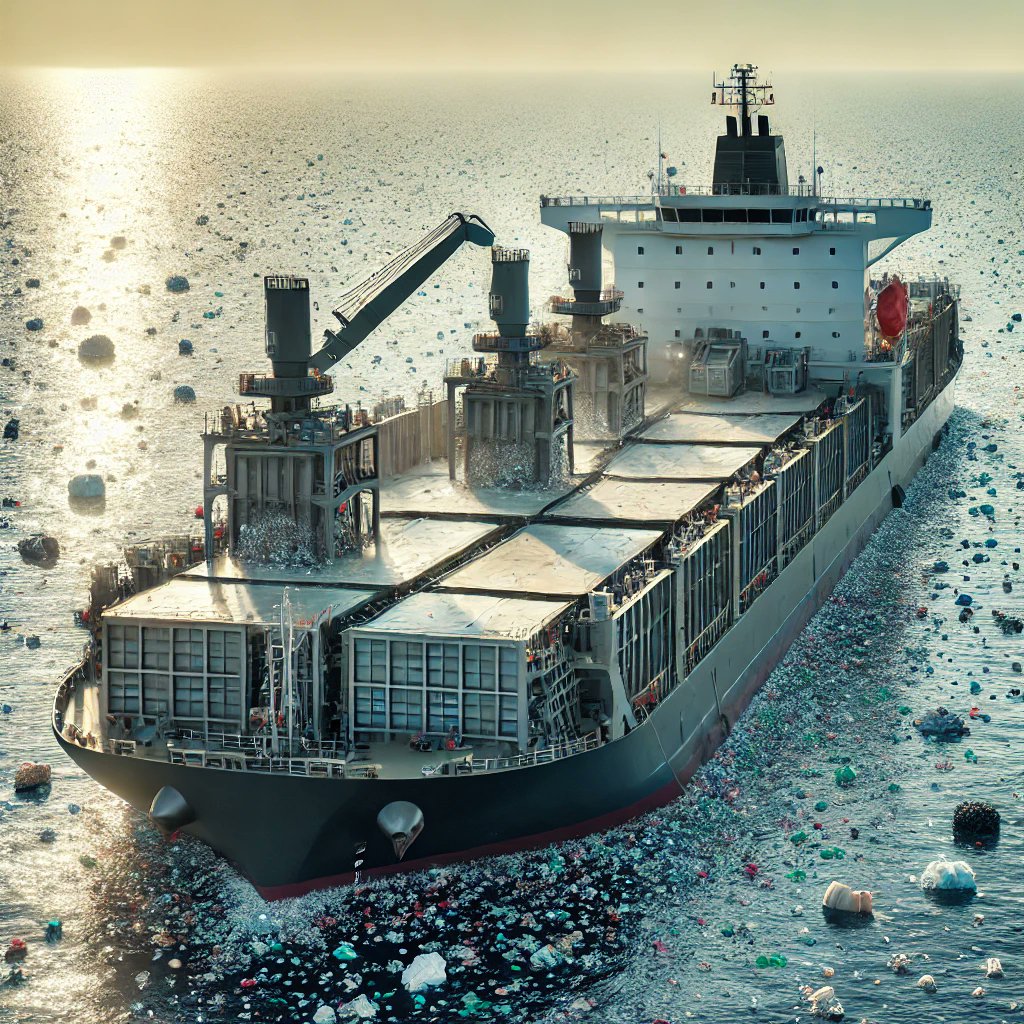
We propose retrofitting a 100,000–ton cargo vessel into a floating processing factory. The ship is equipped with large–scale shredding and mixing units, along with 100 modular molds (each with a 10m³ capacity).
Collected marine plastic waste is first dewatered via compression, then immediately shredded and mixed with our proprietary binder. The resulting material is poured into molds and cured for 6 hours.
Each 10m³ mold consumes 10 tons of plastic waste per day. With 100 molds operating simultaneously, the system can process 1,000 tons of waste daily — fully removing 100,000 tons within just 100 working days.
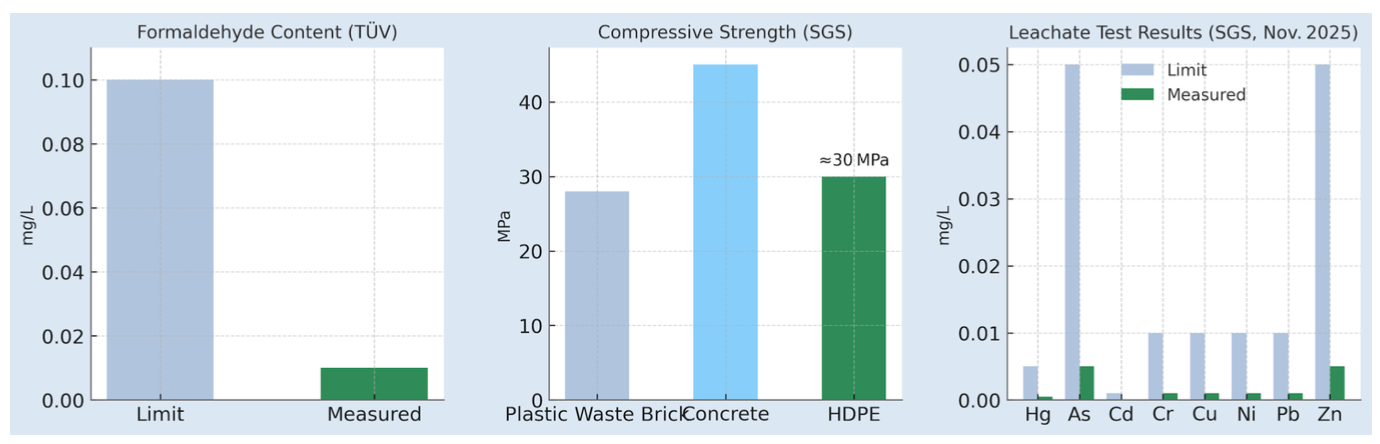
Our patented binder enables solidification of plastic waste with up to 35% moisture. Just 10 hours after demolding, the finished blocks are ready to be used as marine landfill material.
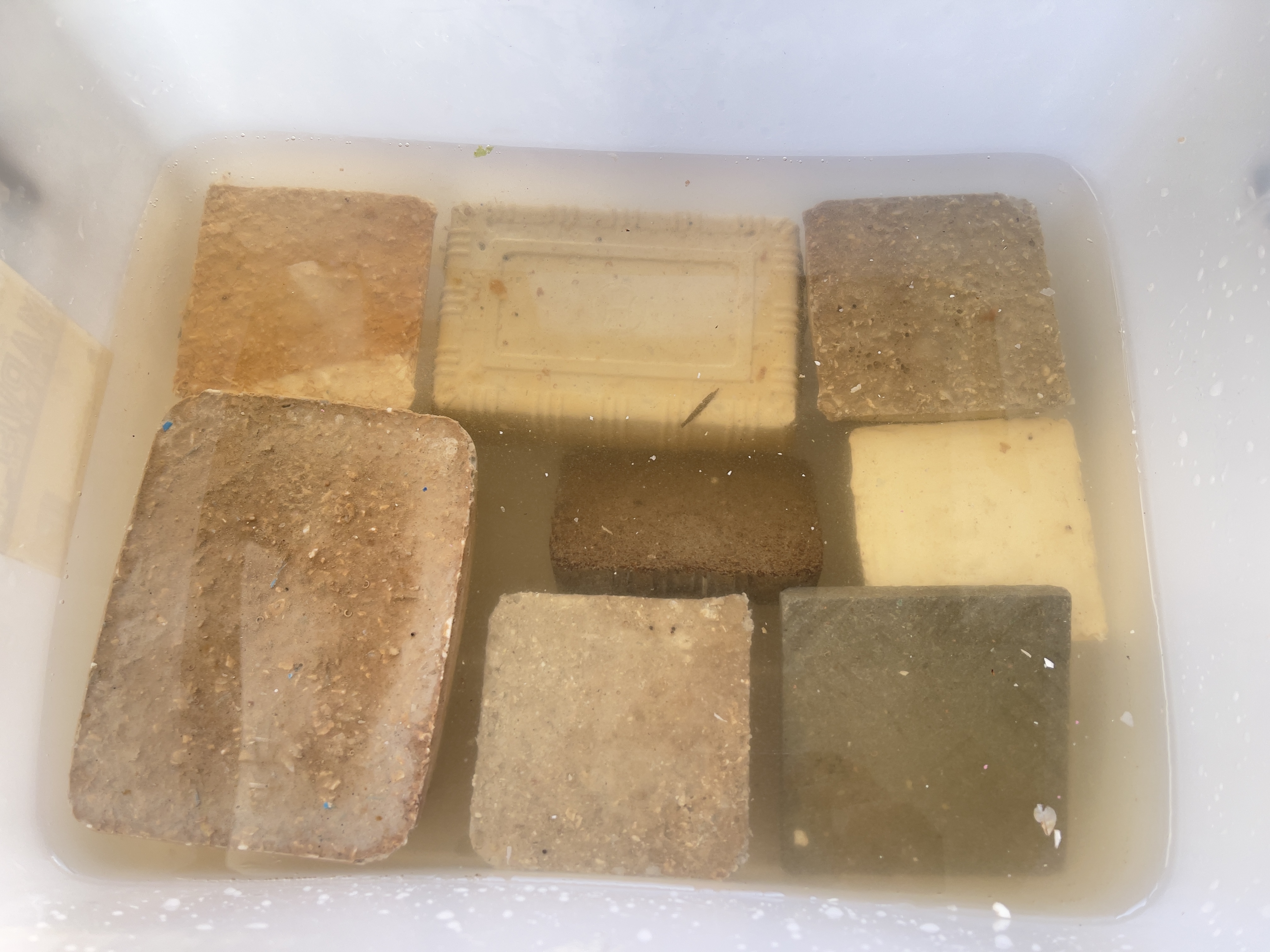
This photo shows samples made from ocean plastic waste that were submerged in seawater for 12 months.
For a video of the production process, please contact the author directly. This image represents only a portion of the samples we created.